A Vacant Shopfront Can Do More Than Wait for a Tenant
A vacant shopfront temporary use can turn an empty unit into a visible local resource while helping owners and neighbours choose a suitable, low-commitment activity.
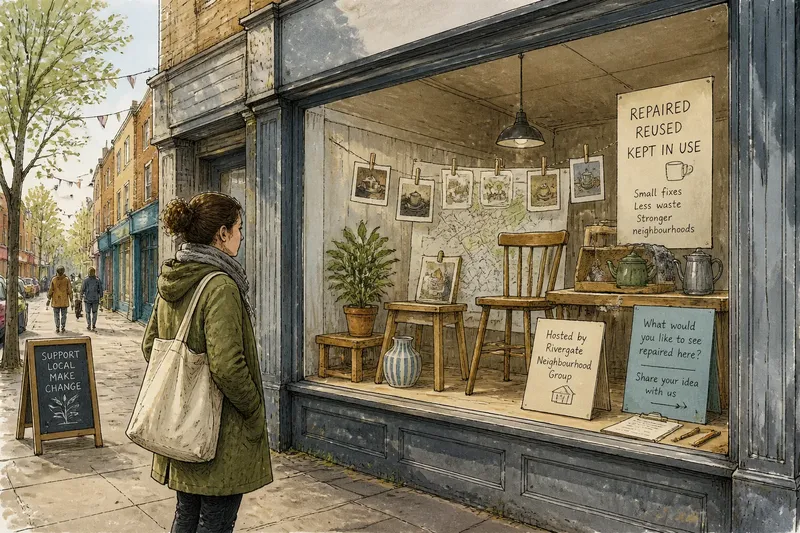
The common mistake with a vacant shopfront is to treat it as a blank space that can only wait for a conventional tenant. A vacant shopfront temporary use can offer neighbours a reason to engage with the unit and give its owner a clearer sense of what might suit it, but a mismatch can waste the host’s effort and leave visitors confused.
Start with what the street and building allow. A window display, a hosted pop-up and an appointment-based room ask different things of the entrance, interior and organisers. The best choice is the one that fits those conditions and has a clear purpose.
A window display makes a vacant shopfront visible without opening it
A window display is the lightest-touch option. Local makers might show objects, a community group might present a map of nearby services, or an artist might use the glass to explain a neighbourhood issue. The interior can remain closed, which may suit a unit with restricted access or an owner who does not want visitors inside.
Give passers-by a simple reason to pause. A focused display, readable from the pavement, can explain who is involved and how people can respond. A weatherproof feedback card might invite suggestions without requiring a staffed event.
A window cannot host conversation, and a display that resembles advertising may be ignored. Reused boards, fabric offcuts and borrowed stands can keep the setup simple; remove or refresh the material when its purpose has passed.
Choose a display when visibility matters more than face-to-face participation.
A hosted pop-up gives visitors a reason to enter
A short pop-up can make an empty unit feel active without pretending it has become a permanent venue. Possibilities include a repair demonstration, a neighbourhood notice room, a small exhibition or a table where residents share practical skills. The activity should be clear from the pavement, so visitors know what to expect before they enter.
This use needs a suitable entrance and a host who can greet visitors, explain the activity and keep the space orderly. Before opening, agree who holds the keys, which areas are off limits, how people will enter and leave, and what happens to materials afterwards. Check relevant permissions, insurance, accessibility and building rules with the owner or an appropriate professional where needed.
Imagine a local group has permission to use an empty unit for one afternoon. It borrows a table, places repaired household items on it and invites visitors to suggest a repair topic. If people stop to ask questions or leave suggestions, the group has a useful indication of what engaged them; that response alone does not establish whether a permanent workshop would work.
Choose a hosted pop-up when participation matters and someone can reliably be present.
An appointment space supports quieter, focused activity
Some activities need a table and a calm setting rather than an open-door event. A temporary appointment space might host a small reading group, a meeting between a local organisation and residents, or an advice session. It can operate at agreed times while the shopfront remains visibly in use.
This option suits work that involves longer conversations or materials that should not be left unattended. It may also fit a busy pavement where a walk-in event would obstruct the entrance. A clear notice should state the purpose, times and contact route, without implying that the unit offers services it cannot provide.
The trade-off is that fewer people may discover an appointment-based activity by chance. Organisers can tell intended participants through a local noticeboard, shared calendar or partner organisation, keeping the arrangements proportionate to a temporary use.
Choose scheduled access when privacy and concentration matter more than walk-in visibility.
Use a vacant shopfront temporary use checklist to choose a suitable activity
Make a brief site check before suggesting an activity. These observations are prompts for discussion, not a substitute for the owner’s permission or any professional advice needed about the building.
- Entrance and access: Observe whether the entrance is clear and usable for the intended visitors. If it is suitable, consider a hosted activity; if not, choose a window-only display or ask the owner about an accessible alternative.
- Visibility from the pavement: Check whether passers-by can see the window and understand a simple sign. If the display is visible, use it to explain the activity; if it is obscured, choose a way to reach people directly or consider another site.
- Interior visibility: Look through the glass without entering. If the proposed activity can be understood from outside, a display may be enough; if it depends on conversation or participation, ask the owner whether visitors may enter before proposing it.
- Space and layout: Ask the owner which areas are available and observe whether the proposed table, materials or gathering point would leave a clear route. If the arrangement fits the permitted area, develop it; if it would block access or rely on an unavailable area, simplify it or choose another use.
- Host availability: Identify who will open, attend and close the space. If a named host can cover the agreed times, consider a pop-up; if not, keep to an unattended display that the owner has approved.
- Activity and visitor expectations: Check whether the sign can explain who is hosting, what visitors can do and when. If those details are clear, proceed to discuss the arrangement with the owner; if they are not, narrow the activity before inviting people.
- Materials and clear-up: List what must be brought in, where borrowed items will go afterwards and who will leave the unit tidy. If every item has a responsible person and destination, the plan is easier to close; if not, remove unnecessary materials or arrange storage first.
Say a neighbourhood group is considering a one-afternoon repair display in an invented vacant unit. Its starting observations are that people can see the front window, the entrance is not suitable for the visitors the group hopes to welcome, and no host can stay inside. The group checks the owner’s permitted areas and learns that the window may be used, while public entry is not allowed. It then replaces the proposed indoor demonstration with a window display of repaired objects, adds a sign naming the host and inviting suggestions, and assigns one member to remove the borrowed stands afterwards. The resulting decision is a display rather than a pop-up: it fits the access conditions, though it cannot offer a hands-on demonstration or conversation inside.
How long should the activity run, and what should visitors be told?
How long should a pop-up last?
Agree an end point that matches the activity and the host’s capacity, then confirm it with the owner before opening. A defined finish makes it easier to remove borrowed items, review responses and leave the unit ready for its next use.
Can a temporary use work with little new equipment?
Often, organisers can use an existing table, clipboard, reusable board or materials lent by participants. Before buying anything, identify the specific need and agree who will keep or reuse each item afterwards.
How can neighbours tell what is happening?
Use a concise sign that names the activity, its host and when people can take part. Add a contact route if useful, and make clear that the project is temporary rather than a permanent business or service.
What should happen before visitors enter?
Agree access, permitted areas, opening arrangements and responsibilities with the owner. Where permissions, insurance, accessibility or building rules are relevant, seek appropriate guidance before inviting the public.
Give the temporary use one clear purpose
Write down the question the activity is meant to help answer. It might be whether passers-by notice a topic, whether a group can host a calm session, or whether the available entrance suits its intended visitors. A focused purpose makes it easier to decide whether the chosen format is useful.
Match the activity to the unit rather than asking the unit to imitate a finished venue. A display needs a visible window; a pop-up needs a host and a suitable entrance; an appointment space needs a clear way to reach participants. If a basic condition is missing, choose a lighter use or another site.
For a vacant shopfront temporary use, the final check is practical: can the owner, host and visitor each understand what is permitted and what happens when the activity ends? Put those arrangements in clear terms, and make sure borrowed materials have a destination. That leaves the unit ready for its next use without confusing a short trial with a promise about its future.